
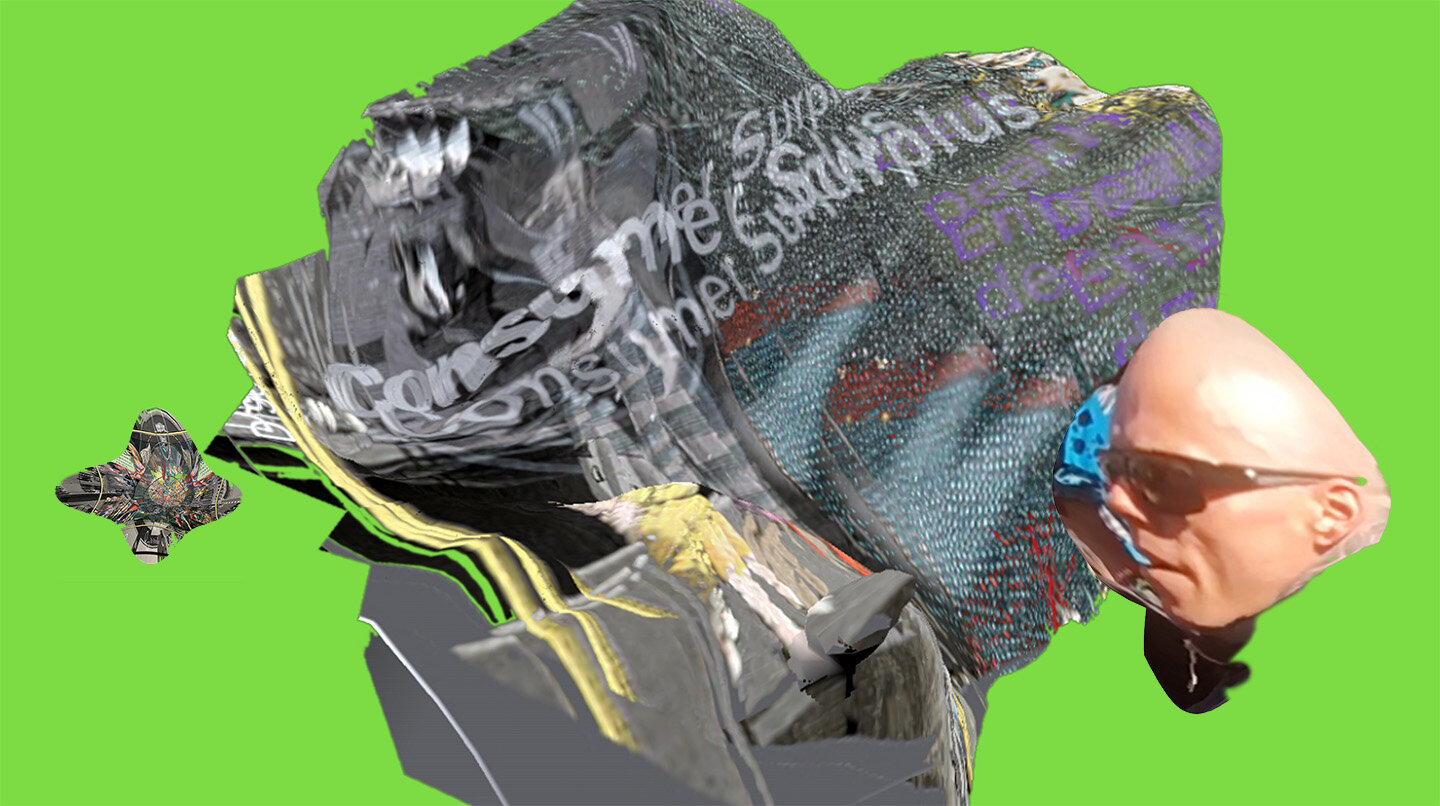
U (excerpts)
U (excerpts)
HD video, 20’, 2020
Mühlenhaupt Video Festival
Part of U were shown at the Kurt Mühlenhaupt Museum Video Festival, Sept 26, 2020
23 North
23 North
HD video, 7’56”
2021
A dream that splits the world in two, balances it on a still point, then topples it. Memories of T.S. Eliot's WW2 poems are exhumed, illuminated by locomotive flashes. As the story unfolds, viewer and scene are merged.
The film has been shown in 2022 as part of Filmriss in Frankfurt (Oder) and the Verwalterhaus, Berlin
aa
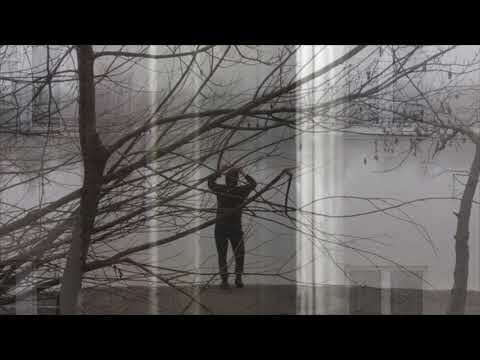
LOCKDOWN
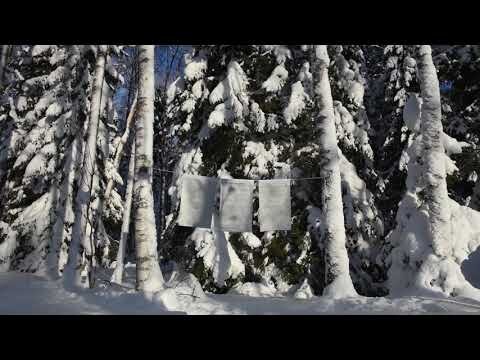
Forest Flags
Installation and performance near Facebook HQ, Luleå, Sweden
2021
HD video, 1’23”
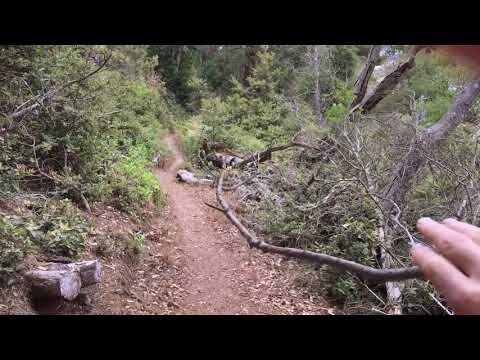
Hands Trees
Invisible links drawn between environment and body

IN MEXICO, COLORS NEVER DIE!
IN MEXICO, COLORS NEVER DIE!
Super-8 Transfer, 15’, 1995
Made driving to Chiapas, Mexico from Minneapolis, Minnesota to report on the Zapatista Guerillas. Calculating the number of miles to frames in rolls of Super-8 film, a frame a mile was shot on two cartridges, approximately 6,000 frames. It was then projected back at the slowest mechanical speed the Eiko-8 would allow.
CHIAPAS ‘95 –a history
We leave Minneapolis in a Geo Prism on a bright, subzero January day, and head towards Chiapas, Mexico for the first anniversary of the Zapatista uprising. My colleague Jean-Marie’s goal is to interview the EZLN leader Subcommandante Marcos, mine is to photograph what comes. In January, 1994, the Zapatistas staged a coup against the exploitation of Chiapas by the North American Free Trade Association. They burned land records, freed prisoners, fought the army, and retreated to the Lacandon Jungle. Around three hundred people died. Our plan is to arrive during the anniversary of the cease-fire. Jean-Marie is working on a book about them and has driven the 4,000-mile roundtrip a few times. She needs the Marcos interview to finish it and go on talk shows. We practice Spanish and talk about Mexico, which I only know through a fascination with Day of the Dead and Huichol rituals. I’m naïve and my father has left me enough money to go. My girlfriend gives me a belt of flattened bullets for luck, friends make me mixtapes, and I give them a last-will-and-testament. At the Wisconsin border I realize that I don’t have my passport. “You won’t need it”, Jean-Marie says, and there is no turning back.
Driving sunup to sundown, we make our way to Kansas and winter turns to early spring. One of the mix-tapes is “Rebel Insurgent Journalists on the Road” b/w “Rebel Insurgent Journalists in a Mellow Mood”. We enter Mexico without hassle and the landscape rolls up like a Spaghetti Western. I stick my hand out the window and pull the trigger on the Super-8 movie camera to shoot one frame per mile, which will exhaust its cartridge in the round-trip. This doesn’t happen, however, as the road and our quest progress and diverge.
Matehuala has a festive glow, with flags and banners suspended above its streets. People walk around selling mirrors, windows, and ladders, like a scene from Orpheus. Today’s cassette is a mix by Timeblind that pulses with Underground Resistance and Basic Channel. In Veracruz we pull over and eat fresh papaya in warm ocean air, and glide past lakes where fisherfolk wearing dye-saturated clothes throw colored nets over the water. By evening we slowly ascend the stretch to mile-high DF, accompanied by the Mexican Philharmonic on the radio, seismically rendering Berlioz. Pollution and altitude sickness have kicked in as we meet J-M’s ex-husband, José, who we’ll stay with. We down a tequila and pass out.
By morning, antibiotics have made me woozy and fever, and I wander the city in search of more Super-8 film. Indiscipline threatens to exhaust the first reel, and photo clerks say that it doesn’t exist, until one does. A crowd is forming in the Zócalo, first a trickle, then a torrent of 15,000 people. It is the anniversary of the uprising and there will be speeches. As the sun sets Cuauthémoc Cardénas, the head of the Party for the Democratic Revolution speechifies. On stage, he’s flanked by female and male Zapatistas, and the masked wrestlers Ecologista and Super Barrio. Respectively they are leaders of democracy, revolution, environmentalism, and the underclass. A woman in a plunge-neck cocktail dress holds a large white dove sign, another one calls for the head of the corrupt former president of Mexico – “Pide la Cabeza de Salinas”. But the protest remains peaceful, if noisy. Land reform, an end to graft, farmer’s rights, and schools are on the agenda.
The next morning, we have an American breakfast at a Mexican Denny’s. President Clinton’s face, who has just bailed out the country, smiles up at us from the place mat from bits of syrup, bacon, and ketchup. At the news stand outside, a tabloid announces the UFO “flap” over the city, with sixteen of them on the front-page.
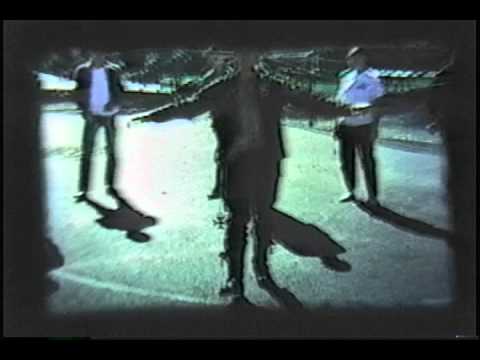
We hit the Muséo Archéologico, where prismatic frescos detail the racial diversity of the country. Multi-color corn, skulls, and dioramas span the ages, and compete with signs for fruity cocktails. School groups mill around the Mayan/Olmec-Brutalist architecture, but the heirs of the stones are not mired in the past. Catholic School girls interview me about my favorite movie star. I tell them it’s Joe Orvis from the film “The Birth of Joe”, a Punk-pagan-nature-boy to lounge-singer success story. “Perhaps you’ve seen it online?”
Leaving the museum, we are stopped by the police. In an effort to curb pollution, they inform us that our license does not correspond to the numbers that are allowed to drive today, no exceptions. We point at the US plates, plead ignorance, and ask if we could drive back home. We even offer to sweeten the deal, but the car must stay. Since everyone is on their best, if crazy, behavior, I go to the occult market by myself.
Appropriately, Mexico City has Minneapolis’s trams from up to 1954, when a deal was struck to expand the freeways and force people to drive. There is a picture in which a Beuys look-alike in an iridescent coat shakes the hand of the Transit Commissioner while the last streetcar burns behind them. I get in one of these streetcars, then realize that I don’t have change. The driver lets me ride free. The occult market is a sprawl of garlic braids that stream from the ceiling and has a massive itinerary of charms –Buddhas and Grim Reapers suspended in polyurethane pyramids, scorpion paper weights and belts, “have-power-over-enemies” candles, “make-him/her-fall-in-love-with-you” powders, “get-money” oils, “evil-away” incense, health vials, luck cards, and a golden, winged goat head.
As the morning star rises, we set off for Palenque to consult the map and pyramids, and set a course for Chamula. Its valley is full of greenhouses, dyed weavings and two churches, one existent, one a burnt-husk. Lightning struck the one and served as proof that the Christian God was not so powerful as the local ones. Holy statues were salvaged and placed in the remaining church with mirrors around their necks so that worshippers’ spirits would reflect back to them when praying and not be lost to heaven or outer space. Soot and wax from candles run over the stone floors like lava, while pious Mayans kneel and place flowers. The guide book warns not to photograph in the church, as a European tourist had been killed for soul-stealing. Other legends involve a shaman known for his “belch cure” to expel disease and evil spirits; he also had the local Coca-Cola contract. Sitting down for some juice at a café on the town square, children mob us and push clay animals amongst our drinks and insist on damage fees. I take all sixty or so and spell “N-O” which makes them laugh, but not retreat. Then I give one a five-peso bill and point the other children at him for change, which gets him and them running off. Before we leave Chamula, there is a shaman that we need to see for a blessing. His hut is not far from the square, and on its grassy walls hang photos of him with Presidents George Bush and Ronald Regan –he secretly cured them of cancer. We receive his blessing for safe-passage, and pay. Along the road out, cane-harvesters sleep in truck-cab hammocks. We drive nerve-rackingly single lanes against them.
Next we head to the Lacandon jungle, to stay with J-M’s friend and guide Chan-Qui’n quatro. His father, Chan-Qui’n primero, has fourteen sons who are sequentially named after him. As an advocate for his people, the Tzotzil. J-M tells me that he had wandered the streets of New York without a word of English, then spoke to the UN. That night, we sleep in thatched hut hammocks, and I dream I’m in a disco.
In the morning we go down the road to meet the father. Compared to Chan-Qui’n quatro’s manicured yard and huts, Primero’s is a M.A.S.H. base of big military tents, a general store, and rusted, broken pickups traded for oil rights. Chan-Qui’n is in the mess hall/community tent with his four wives and assorted kids. Chan quatro interprets Tzotzil to Spanish, and we are invited to tea. We ask about a guide to take help us bypass military checkpoints, in case they get closed, to get to the Zapatistas. Primero says that he knows of one. Given the compound’s run-down chaos, I can see why Quatro left to learn Spanish, start a guide service, and become a self-reliant spokesman. Those who remain live somewhere between old and new world limbo. Primero is in his 90’s and still making babies who play on a grassed-over airstrip with homemade wooden planes. Quatro makes unfired clay crocodiles, turtles, and jaguars with hollow night-vision eyes for us.
To go even farther back into the consciousness of the land we take a boat on the Usamacinto river to Yatchilan, a Mayan archeological dig. Amidst the soccer fields where skulls were used as balls, we learn that it was ruled by Jaguar King and son. Doctors Without Borders are there with intense political awareness like visitors from another planet. Wearing an Ornette Coleman T-shirt, I walk up a jungle path until I come across two Lacandon children in dirty white smocks, and our hundred-yard stares merge. Leaving the launch, a Coke truck has gone into a ditch, and locals flock to collect bottles.
We spend one more night with Chan Qui’n lV, then go to find our guide in a nearby compound of corrugated huts. Two albino children with jet-black hair and pristine white robes come out, their parents, only slightly larger, follow behind. They are ecstatic to see us, and their heads press into our chests as they give us big hugs. The kids, Pegasus and Chan, are freckled and hyper verbal. Despite my minimal Spanish, I understand that everyone is drunk, and they offer us Palché, a fermented bark wine. Then, a white-haired man in a tortoise shell sweater appears, holding a sack of turtles –our Guide. Peg and Chan show me the grounds and a God House, in which only males are allowed to commune.
Convening with the guide, we strategize routes to the Zaps and set out to try them. January is the rainy season and the roads are muddy, but the Geo has four-wheel drive and seems unstoppable. With one more hill and ditch to go, however, it plateaus on deep muck and we are barely able to push it off. That night, back at the hut, I make a shadow puppet show for the kids, who gasp and laugh as I spin a story of Jesus and the Dinosaurs. All night long there is a terrible scratching on the side of the corrugated walls that evokes horrible visions of what is out there. At dawn, the kids take me to the God Hut, show me its clay figures and shrines, and tell me not to take photos. I sneak one anyway as they explain the conch shells and spirit calls. When we get back to the house, turtle-man has made turtle soup, and I remember that his bag had hung against the wall and that the nocturnal scratching was now lunch. As we prepare to leave, I give Peg and Chan a T-shirt with a cow on it that is as big as their white robes. Their parents apologize for being drunk when we arrived and explain they’d been at a festival. We take the main road to San Cristobal de las Casas and another approach.
San Cristobal, is one of the cities where the uprising occurred and is Chiapas’s former capitol and largest tourist town. A converted monastery, Na Bolóm, is our base, with a few other press and activists. It has also been Diego Rivera’s studio, and in the garden is a statue of him, drunk and embracing a woman on either side –they help him stand. In the morning, the smell of black beans and tortillas mix with Copal incense and fog. They are incredibly delicious. An English journalist reads “The End of Nature” in the courtyard and talks about the uprising in terms of environmental rights. Hand-made fireworks in tightly rolled newspapers pop in bursts, and a wedding down the street booms techno. As the fog burns off, I walk outside to see the bride and groom standing on huge palm fronds.
While we are there, Bishop Samuel Ruiz, a mediator for the Zapatistas, hosts a peace conference. Thousands of natives from Chiapas and beyond gather in celebration and give testimonials in his church. Later, he is nominated for the Nobel Peace Prize. In the press-crush that ensues, I manage a photo of a young barefoot Tzotzil woman next to an American flag.
Resigned to reckoning with official channels, we snake up jungle mountains on narrow black highways towards the soldiers. At one point, the fog becomes so thick that we have to open the door and stick a flashlight out to see the shoulder line. The curse of the God House photograph! Endless remote hills sometimes sprout election billboards that are defaced by blood-red paint and pro-Zapatista slogans. At one field, we pass a hand-painted sign that declares the occupants to be an autonomous community squatting on absentee landlord land, and that they do their own policing, so watch out. The first of the military checkpoints comes not long after, and the lips of a young, indigenous soldier move as he reads our papers. This goes on for five more stops until we come to a bunkered encampment roadblock with a Ray-Ban’d, American-looking advisor who puts a stop to our progress. Despite having made this trip many times, J-M has, in her excitement, neglected updated car registration papers. We hear them refer to it as “chocolaté” meaning stolen, then we’re placed under arrest.
The absurdity of the situation is dream-like as an officer accompanies us in the car, which we have to drive to back to Customs in Palenque. He is slight and youngish in a white shirt with insignias, and rides shotgun while I drive. I think that if the trip ends here, I’m going to go all-out. We come to a mountain pass, stop for construction traffic I shoot some film, and he has a smoke. After a few pleasantries in Spanish, I start grilling him on the UFO flap and the who, what, and why of aliens in general. Finally, he admits that his brother-in-law has seen one. We arrive at Customs after business hours and have to spend the night under house arrest in a motel with separate rooms. Around midnight, the heat and anxiety are too much and I ask the desk clerk to let me out for a walk. He says OK. Overhead, the empty streets are crisscrossed with tiny flags, and a black VW Bug sits in front of a funeral parlor. In the morning, Customs almost lets us off the hook because J-M has papers going back six years on the car. We can go, but have only ten days to get out of the country, the countdown typed in triplicate on onion-skin paper.
Four hours to the barricades, and they let us through this time. The road forward has been blown to hell with more potholes than surface for at least a mile, and we enjoy the true virtues of the 4WD Prism –at 60 mph, it feels like water-skiing. Finally, we arrive at the Liberated City of Guadalupe Tepeyac, named after the EZLN’s “mobile city” in the jungle. Horse-mounted Zapatistas greet us by a cantilevered gate made of trees. They wear the standard bandanas and repurposed seat belts with bullets and toothbrush, and are courteous and relaxed. We are allowed into the main square and told that we will be staying in the abandoned hospital. This had been built as a publicity stunt by the Salinas government, which removed its multi-million-dollar equipment right after the dedication ceremony. Until they vet our credentials, this is our holding cell, and we share it with free-range chickens. We’re cleared at the same time a soft-drink truck arrives, and suddenly women and children appear. Also, in the compound are other journalists and altruists. One is from Sweden with an early digital camera that looks like the Batmobile. Another, who shares my name, is a skater/photographer, researcher/fixer from LA for Oliver Stone and the Beastie Boys. Finally, there is M.S., also from Minneapolis! She is of Irish/Mexican descent and has a weaving collective in San Cristobal that helps women and the Zapatistas. She thinks one way to end the conflict is to have a love-child-savior with Marcos, but remains an outsider. Suddenly, many cars drive in, a cease-fire has been declared and with it a steady stream of journalists. Our turn comes after dark, but Marcos is elsewhere (in secret negotiations that eventually lead to peace). Instead, we have the pleasure of meeting Major Moises, who is dressed exactly like him, complete with pipe. J-M interviews him while I shoot video and stills. His responses are measured, calm, clear, and eloquently scripted for staying on message from interview to interview. As dogs bark in the background, we are nonetheless satisfied with his agenda and vision of peace and land for the people. Back at the hospital, we discuss waiting for Marcos against our forced departure date, since it’s a four-day drive to the border. Then, we’re told not to leave our confines without accompaniment and it’s lights out.
The next morning, we decide to go. No one comes to ask if we would like coffee or breakfast, so I wander outside to take some background shots. After I return, we eat and get ready to leave when there is a cross-chatter of walkie-talkies about a photographer out-of-bounds in the compound whose film needs to be confiscated. Fortunately, they conflate our names, and we pull out.
The drive north to Palenque is breezy, but there has been tension about J-M’s conservative driving, and she decides to push things. On the narrow foggy two lane up Popocatepetl, she begins passing everything in sight. As we crest the summit, she goes to pass a long-trailered Semi, when another one comes out of the mist. The only way out is to brake and glide under the adjacent truck. Its trailer-stand inches towards my head and slowly spiders the window –miraculously, it doesn’t break. She zips out again into the empty fog and speeds down to the flats, and pulls over with adrenaline shakes, cursing that this is the day the trip insurance expires. Neither of us remarks that Black Magic Woman is playing. Getting into DF late, we take a hotel and I drink tequila and ghost-walk the desolate streets near a black Victor Hugo arch.
The return trip’s calm lasts to the isthmus of Theuantepec, where we stop at a Mission-style motel with Wanted posters wheat-pasted onto it. Then a culture shock to see that the Superbowl is on. Café Tacuba plays half-time for the Latino market broadcast. Flames shoot out behind the singer who is made-up in devil-face and horns. In Oklahoma, the Geo, which has been rock solid, shudders like it is going to explode. We leave it on the roadside and hitch a ride to the nearest dealership. After a look, the manager surmises that no transmission fluid had been added the entire trip, and it is totaled. I am blamed, but was never instructed. As we get to talking about the journey, he lets out that he served in Vietnam, is the great grandson of Jesse James, and would I like to step out back to play Russian Roulette. I tell him that I’d had enough for the time being. With no Greyhound Station near, we flag down a pickup and, for forty bucks, ride in the back to Oklahoma City. Six months later, its Federal building is bombed and Timothy McVeigh is arrested near the dealership.
–Sean Smuda
PolyglotYrCrack?
Hi-8 Video, 15’, 1995
PolyglotYrCrack? is based on an automatic writing interpreted as a series of exchange rituals that include money, sex, and work, and are mediated by speaking in tongues.
The Birth of Joe
Super-8 Transfer, Hi-8 Video
15’, 1994

Extremely Furthur
Super-8 film, Hi-8 Video, 1995, 20’
The Furthur Raves started when Drop Bass Network brought Aphex Twin to a farmfield in Wisconsin

They Aren't Singing
HD Video
1’37”, 2022
Plunder
FIlm